You can do beautiful work and still lose the customer. Anyone who's been in this industry long enough has seen it, a wrap that looks great in photos, an installer who knows their craft, and a one-star review because the customer felt rushed at intake or didn't understand the timeline.
The wrap is the deliverable. The experience is the product. They're not the same thing.
Here's what shops doing this well actually do, broken into the moments where it's earned or lost.
1. The first 60 seconds
Most customers walking into a wrap shop have never been in one before. They're standing in a space full of unfamiliar tools, smells, and people who clearly know more than they do. The default emotion is mild intimidation.
The shops that handle this well do simple things:
- Someone makes eye contact and greets them within 30 seconds of walking in. Not “be with you in a sec” from across the bay. An actual greeting from someone who stops what they're doing.
- The waiting area, if there is one, is clean and intentional. Not a folding chair next to a parts shelf.
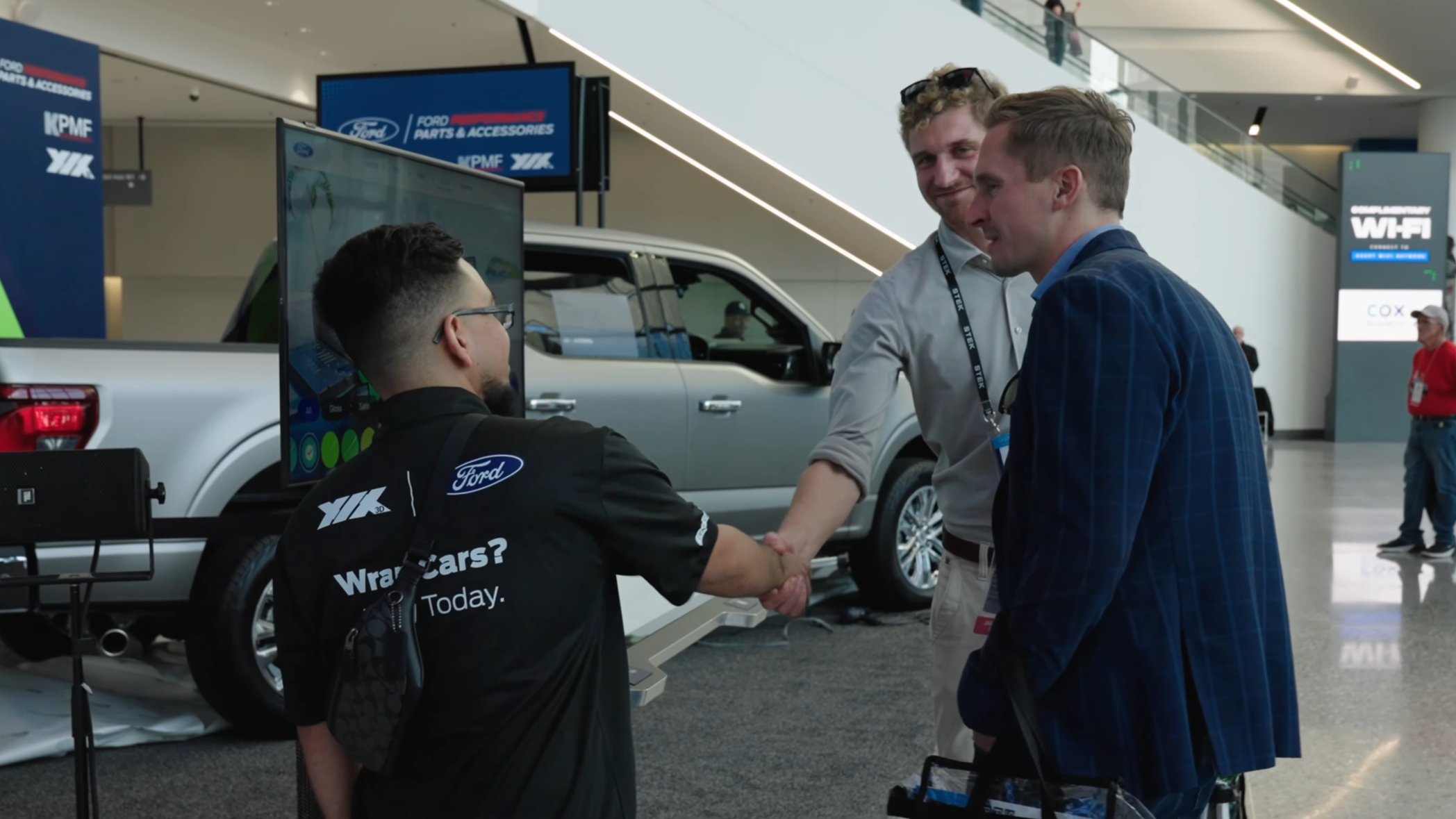
- If the shop owner or lead designer is on-site, they introduce themselves. Customers remember a name attached to a face far longer than they remember a shop.
None of this is expensive. It's a posture, not a budget item.
2. The consultation
This is where most shops have the biggest opportunity to differentiate, and most don't take it.
The bad version: customer shows up, looks through a binder of vinyl swatches under fluorescent light, picks something based on a 2×2 inch sample, gets quoted a price, leaves to think about it, never comes back.
The good version is structured. It treats the consultation like a real meeting:
- Open with what they want, not what you offer. “What's the car going to be used for? Daily driver? Weekends? Tracked?” The use case shapes everything downstream, material choice, coverage areas, finish.
- Show, don't list. Vinyl swatches are useful as material samples but useless as visualization. The customer cannot mentally map a 4-inch satin swatch to their entire car. This is exactly why visualization tools have become a baseline expectation, more on this below.
- Be honest about limitations. If a color shifts blue in shade and green in sun, say so. If a satin finish shows fingerprints more than a gloss, say so. Customers who feel they were oversold are loud customers.
- Quote in writing, with assumptions stated. “Full coverage, 3M 1080 satin black, includes door jambs and recessed areas, excludes door cups, $4,800, 3 business days, 6-month warranty against material defect.” The assumptions matter as much as the number.
3. The waiting period
From deposit to drop-off can be days or weeks. Most shops go silent during this window. That silence is where doubt grows.
The fix is so simple it's almost embarrassing: send one update mid-week. “Hey, your material arrived, we're scheduled for Thursday morning, here's what to expect at drop-off.” That's it. One message, sent unprompted, kills 90% of the “is this still happening?” anxiety.
4. During the install
For multi-day jobs, send a progress photo on day one. You don't need a content team, a single shot of the hood pulled, the panel masked, the first piece going on. It tells the customer “your car is in capable hands and real work is happening.”
This is also where you protect yourself. If you discover paint damage, a misaligned panel, a part that needs to come off and isn't going back the same way, call the customer immediately. Surprises at handoff are how trust dies. Surprises at hour two are just collaboration.
5. The handoff
This is the moment they remember most. Get this part right and you'll get referrals; get it wrong and your work won't matter.
- Walk around the car together. Don't just hand over keys. Stand next to the customer and look at every panel. Point out a few details you're proud of. Point out anything they should know, a recessed area you couldn't fully wrap, an edge that needs to cure for 24 hours.
- Give care instructions in writing. No hand washes for the first week. No pressure washing within 6 inches of an edge. What soap is safe. When the warranty starts. What to call you about. A printed one-pager beats a verbal recap every time.
- Take a photo with their car, with permission. Send it to them. They'll post it. You'll get tagged. That's free, durable marketing.
6. After they leave
Reach out at 72 hours: “How's it looking? Any questions?” This is when small concerns surface, a corner they noticed, a question about washing, and it's far better to hear about them now than in a review.
Reach out at 30 days: “Just checking in. We're here if you need anything.” If you want to ask for a review, this is the right time.
What visualization changes
The single biggest shift in customer experience over the last few years isn't a soft skill, it's a tool. The consultation step in particular has been transformed by 3D visualization.
The old flow: customer flips through binders, narrows to two or three colors, asks “what would this actually look like on my car?”, and you say “trust me, it'll look great.” They sometimes do. They often hesitate.
The new flow with Zeno: customer sees their exact vehicle in the exact finish they're considering, rotates around it, compares it side by side with the alternative, sees it under different lighting. The conversation shifts from “will I like this?” to “I like this, let's do it.” Shops using this report close rates climbing significantly, not because the customer is being sold harder, but because they're being sold less. They're choosing.
That's really the whole point of customer experience: get out of the customer's way and let them feel confident in their decision. Everything else follows.